 01
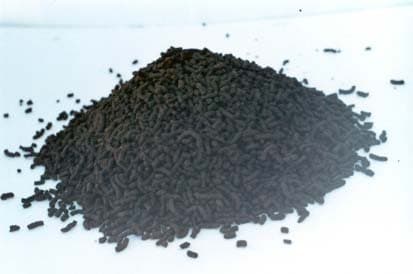
01The conditioner
Zander Humus
Dredged sediment, frozen dry and graded. Holds water at twice its own volume, holds fertiliser, and holds salt away from the root. One application lasts up to fifteen years.
Zander Corporation/Mells, Somerset/Est. 2002
Zander is an organic sediment dredged out of the choked lakes of northern Europe. Laid into desert ground with the right , it establishes trees and crops on a fraction of the water they would otherwise need — and goes on doing it for fifteen years.
The material
In the flat glacial shield that runs from Poland through the Baltic States into Russia and Ukraine there are lakes so choked with organic matter that only the water at the very surface is clear of it. is the remains of lakeside reed, fallen year after year into water too still and too starved of oxygen to rot it properly.
Nothing burnt it away. It settled instead as a jelly, roughly a millimetre a year, since the glaciers retreated — and the vitamins, organic acids and minerals held in the original vegetation were preserved rather than lost. Fifteen thousand laminations later, the lakes need dredging and somebody has to do something with what comes up.
Dry it in a normal Polish winter, blend it, bag it, and ship it to a desert, and it will grow an olive tree on one litre of water a day. That is the whole business. The rest is .
The system
01The conditioner
Dredged sediment, frozen dry and graded. Holds water at twice its own volume, holds fertiliser, and holds salt away from the root. One application lasts up to fifteen years.
 02
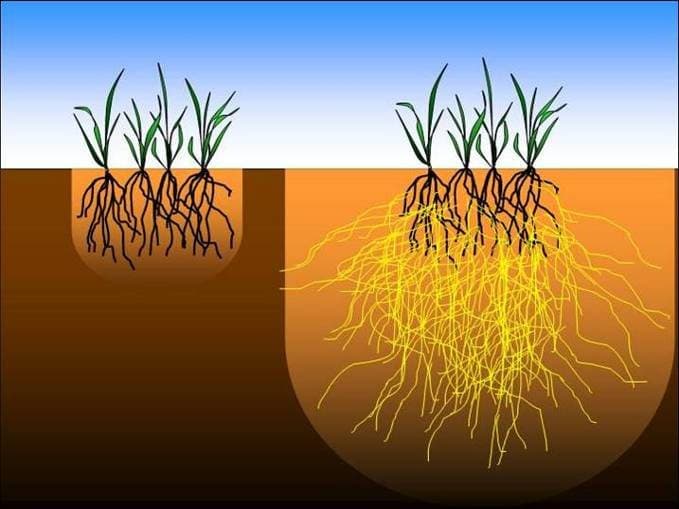
02The root system
Six strains of Glomus fungus, selected out of saline arid ground. It grows into the root, then out into the soil — a mycelium up to seven hundred times the volume of the roots themselves.
 03
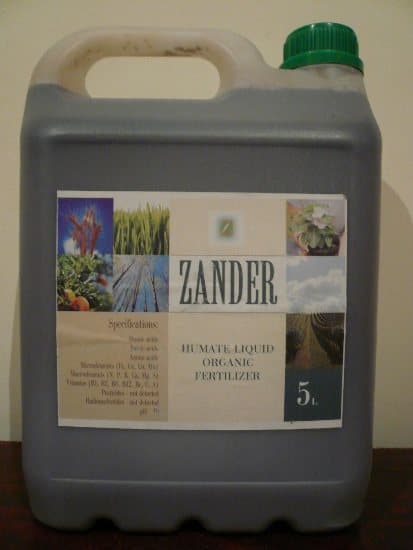
03The season's work
A liquid extract of the parent material, sprayed on the leaf at one part in four hundred. One litre treats a hectare. It is the part of the system that fits in a container and ships anywhere.
The result that matters
At in northern Saudi Arabia — a five-million-tree olive farm drawing on three hundred and twenty-six wells, now facing an abstraction tax — a trial block was planted against a conventionally farmed row. The treated trees took the equivalent of one litre a day.
They did it standing in ground six times more saline than the conventionally farmed control, which had the better soil throughout. By the end of the season they had caught the control up, and then passed it. The mechanism is documented rather than asserted: microscopy confirms the root colonisation, and excavation shows the broad even root system that makes infrequent deep watering survivable.
Evidence
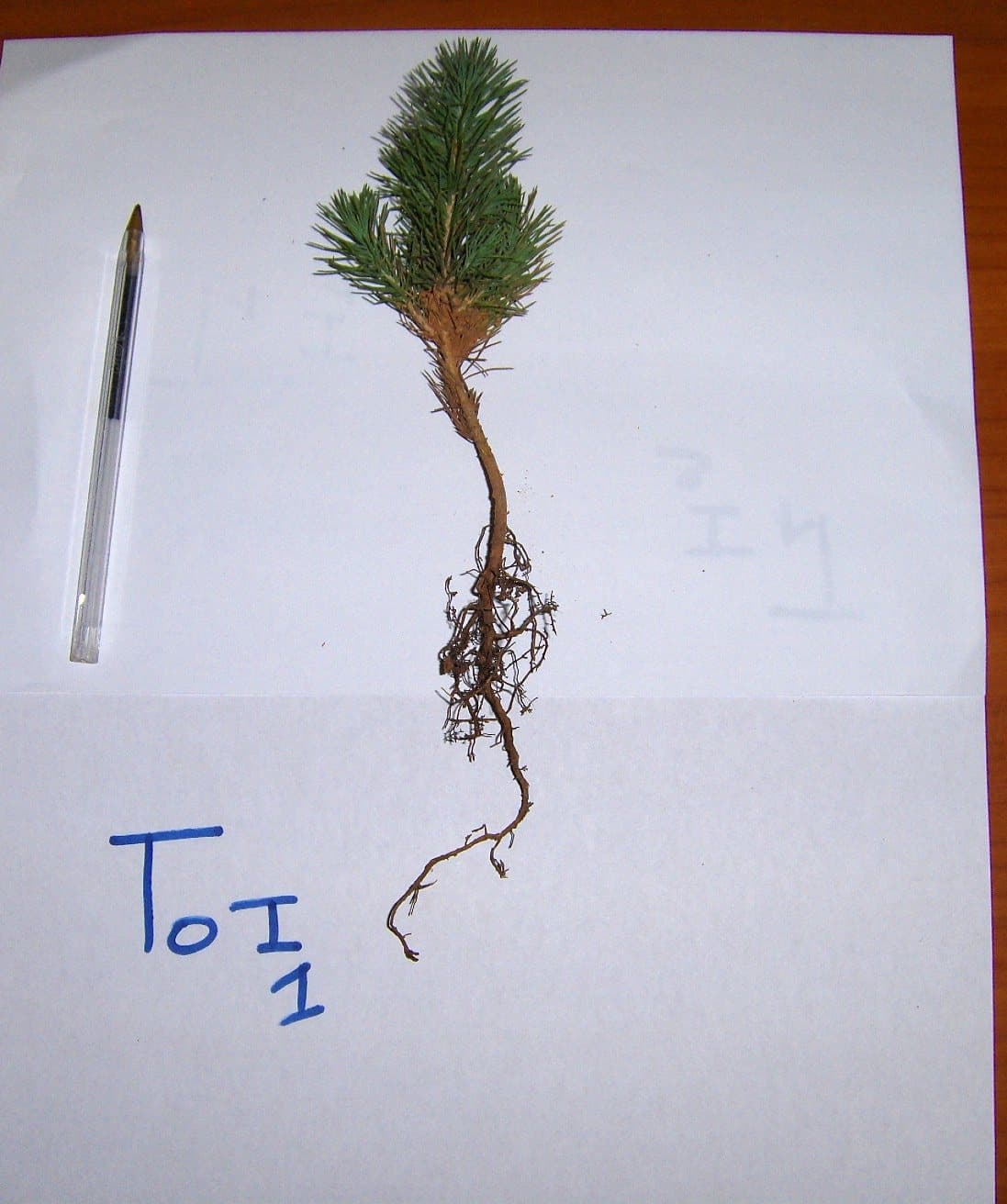
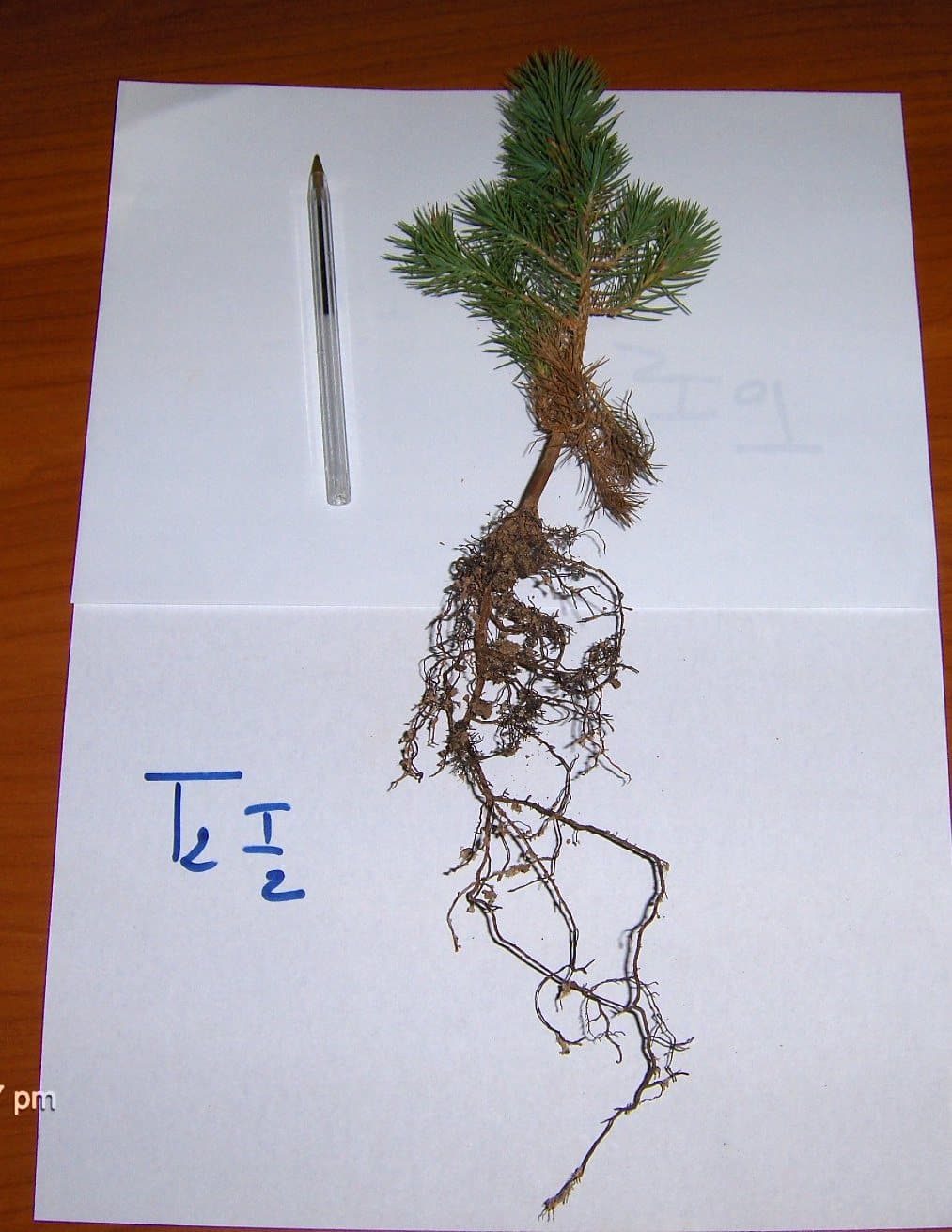
Bouarfa, Morocco / with UNIDO
Same species, same desert ground, same nine weeks. The Moroccan government and the United Nations Industrial Development Organisation had earmarked four areas of over a million hectares each for forestry; the binding constraints were water and the total absence of organic matter. Those running the judged the increment equal to two years’ growth.
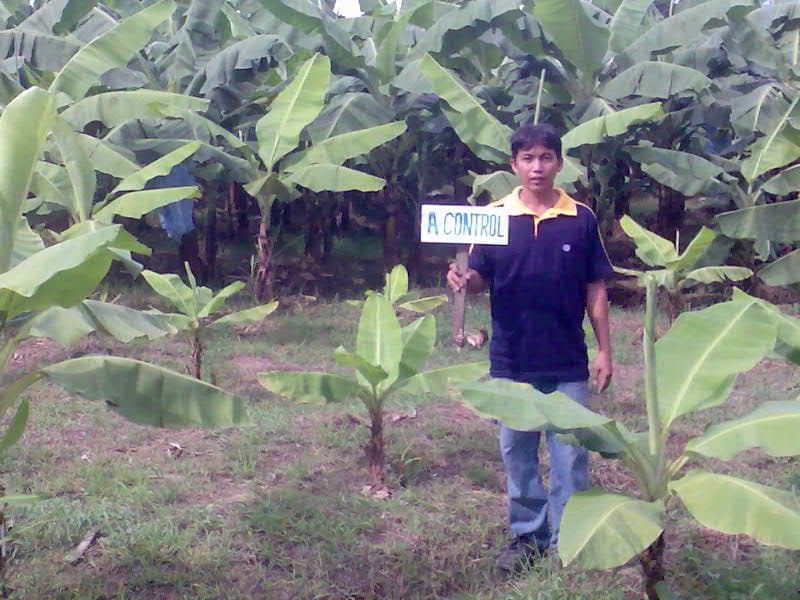
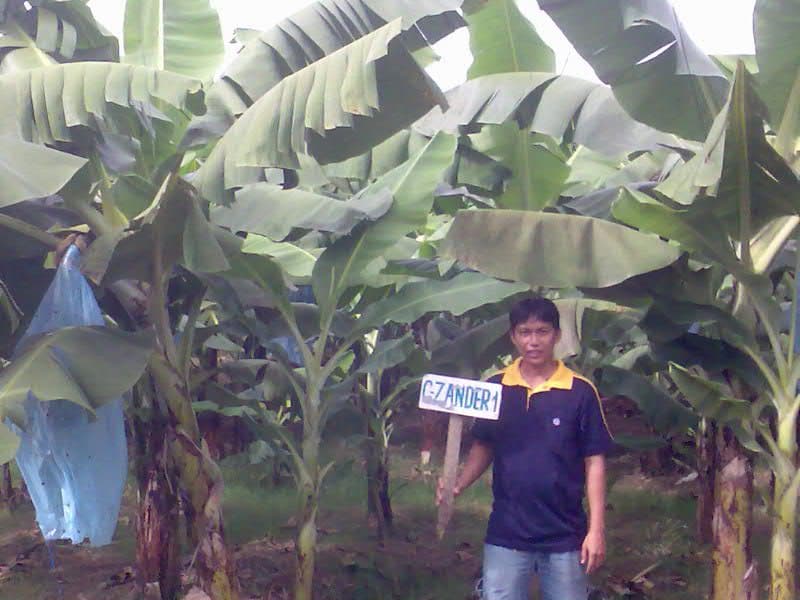
Mindanao, Philippines / with Fresh Studios
No chemical fertiliser on either plot. The bagged bunches on the treated side are the commercial point — the were not yet carrying fruit worth protecting.
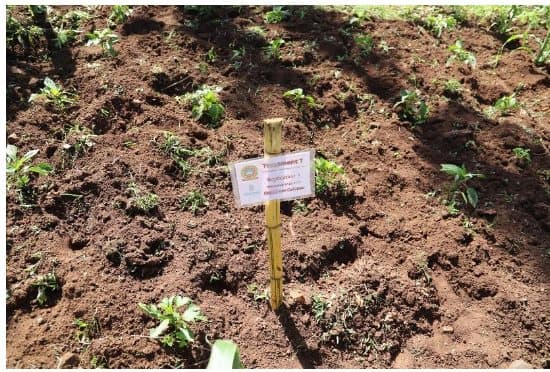
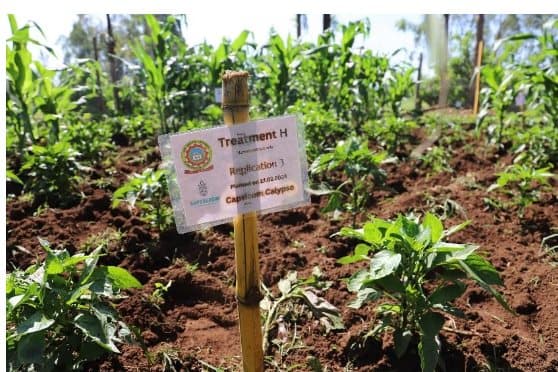
Kenya / 2024
Capsicum under glass. The control had di-ammonium phosphate at the recommended rate; the other plot had nothing but the . No conditioner, no mycorrhiza.

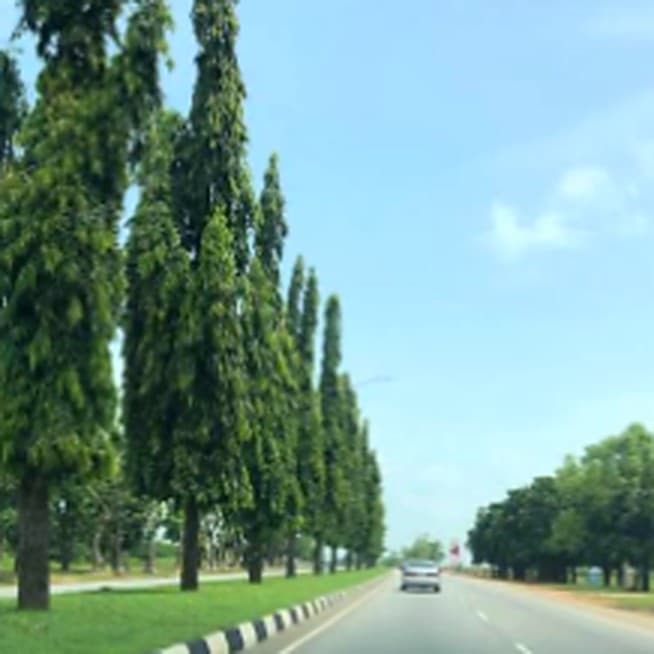
Abuja, Nigeria / planted 2011
Every other result here is measured in weeks or months. This avenue on the approach to Abuja International Airport is measured in years — the same masquerade trees at five, and again at twelve. .
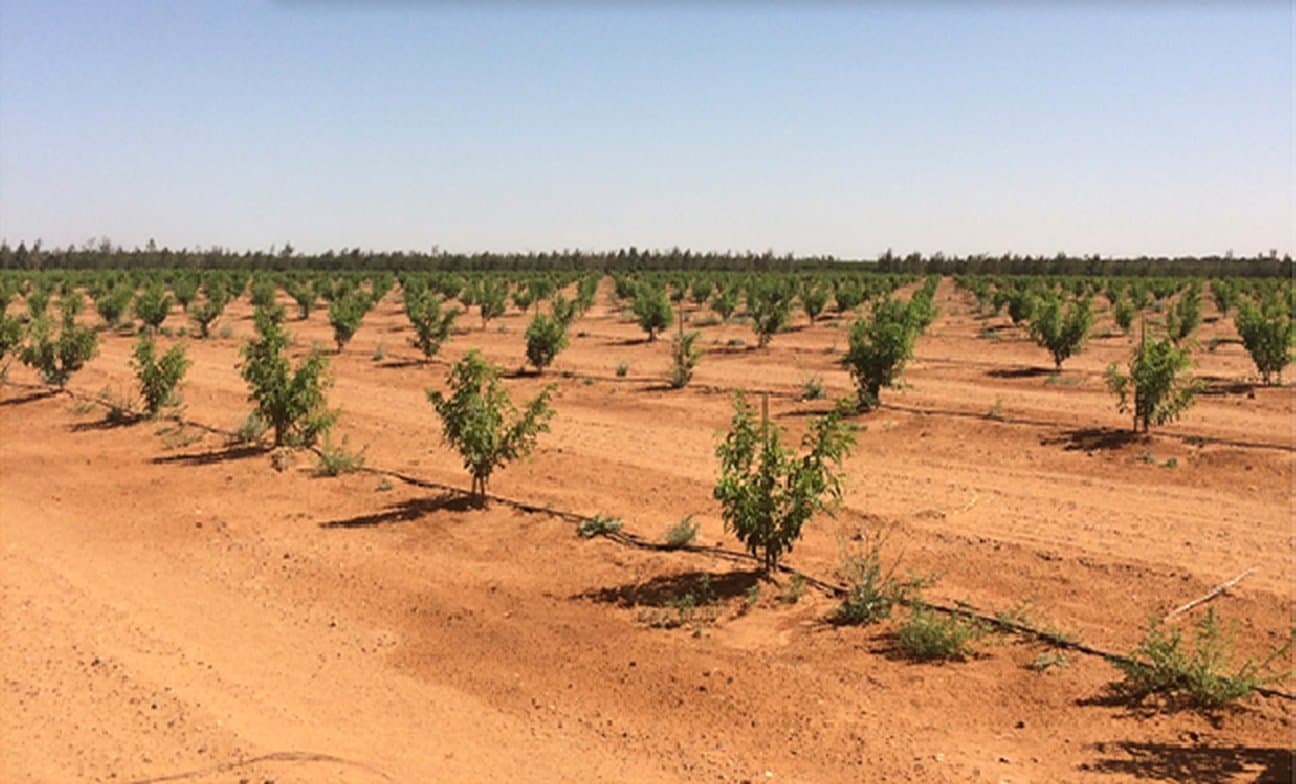
Al Jouf, Saudi Arabia / with JADCO
Two litres of conditioner per plant and a dip of mycorrhiza. The water arrives clean from the Jordanian mountains and picks up its crossing a desert that was once sea bed. is jointly authored with the farm’s own engineers.
In practice
If you arrived with a problem rather than a crop, start with .
Olive, avocado, mango, banana, date palm, pine. One treatment in the life of the tree, and far fewer casualties in the first two summers — which is where the money goes.
Barley and oats returned a twelve per cent improvement over conventional, with no chemical fertiliser and no irrigation. A PVA seed coating lets the spore travel dry through an ordinary tractor seeder.
Tomato, pepper, chilli, cucurbit, onion, celery, flower crops. Dip the transplant, then spray three times through the season.
A permanent green sward in a hot country, with no drip-feeding after the first six weeks. Jumeirah Golf Estates in Dubai is a Zander-treated course.
More than ninety-nine per cent of dissolved heavy metal captured out of solution. Used on radioactivity at Chernobyl, on PAHs and PCBs, and to turn oily drill cuttings back into soil in twelve weeks.
Land written off as unfarmable. The conditioner buffers salt for at least nine years — long enough to get a plantation away.
Our position
So it is worth being plain about the ninety-three per cent. Granules do not save water. What the conditioner and the fungus do is build a root system broad enough and deep enough that a tree can survive fifteen litres a fortnight instead of fourteen litres a day. The honest claim is that the product makes a low-water regime survivable — and that regime uses about a tenth of the water.
And was one site, over one season. We stand by the figure recorded there. We do not promise its exact replication on your soil. What we will commit to, in a supervised local trial, is a defensible reduction of fifty to seventy-five per cent — provided we supervise the initial planting and the irrigation protocol, with the data collection thereafter in your hands, ideally a local university’s.
None of which is a reason to wait. The products are supplied commercially today — in date groves, on golf courses, and along the road to Abuja airport — and we can supply for a full planting season now. Where a programme would rather see the water economy proved on its own ground first, a demonstration plot will settle it inside one season; it is an option, not a precondition. , including the one incompatibility that matters.
Footprint
Trials, plantings and commercial supply, from the Arabian Peninsula to East Africa and the Mediterranean.
Next step
A demonstration plot on your own ground, supervised by your own agronomists, measuring water used per surviving tree. It uses planting you are doing anyway, and it answers the question in one season.
We supervise the initial planting and the irrigation protocol; everything after that is yours to record. Material for a demonstration plot is supplied at cost, and in practice these are sponsored by the local authority or the ministry of agriculture.
Zander Corporation Ltd · Mells, Somerset, United Kingdom